
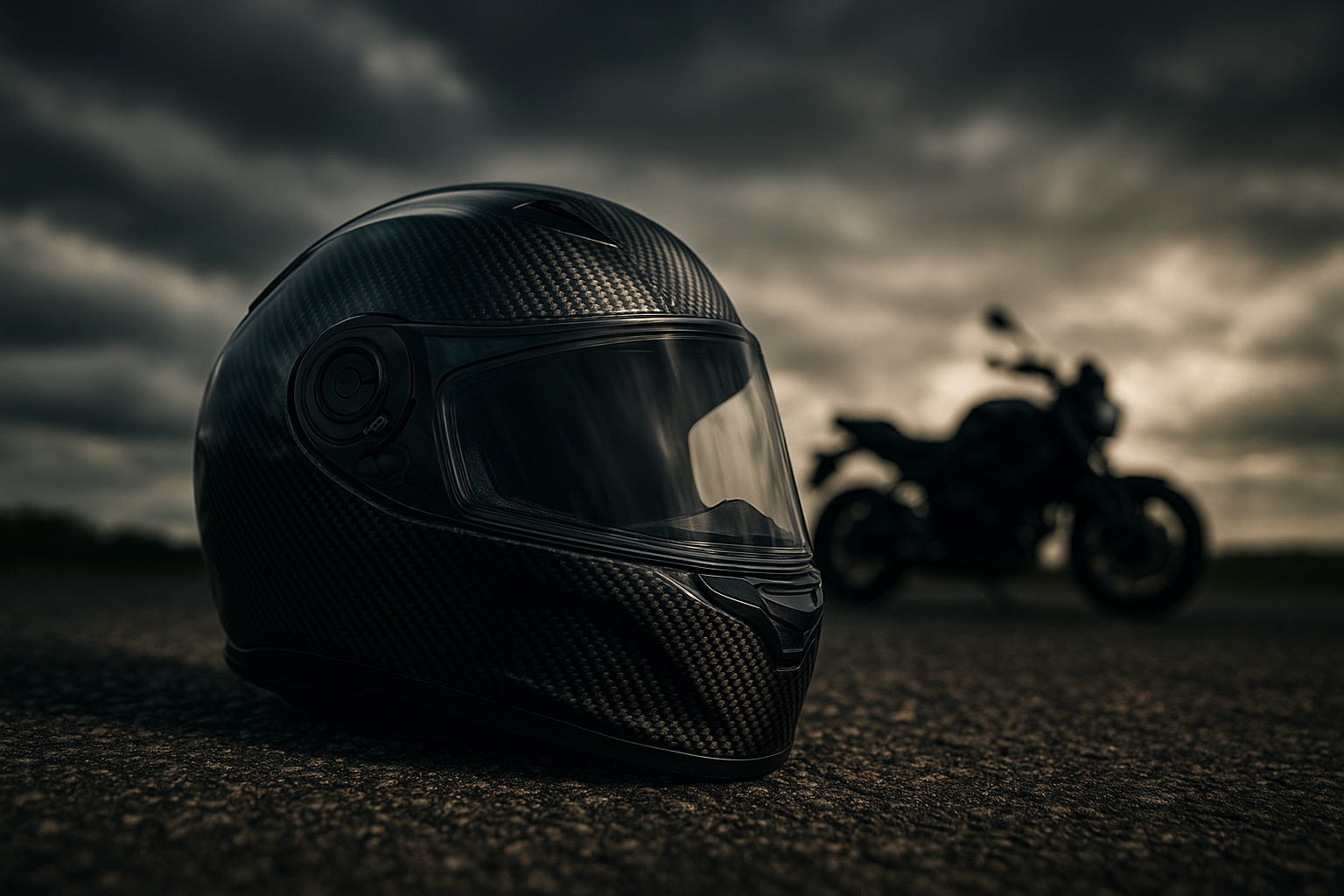
Your body armor manages fractures and road rash, but your helmet protects the CPU. In a survival hierarchy, head protection is non-negotiable. While a broken bone heals, a traumatic brain injury (TBI) alters your reality permanently.
Statistics from the NHTSA consistently indicate that riders without helmets are significantly more likely to suffer fatal head injuries. However, simply wearing “a helmet” is insufficient. This guide dissects the mechanics of energy management, shell integrity, and rotational force mitigation to ensure you select a lid capable of delivering true motorcycle helmet safety when the ride goes sideways.
Anatomy of a Lid: Understanding Construction
A motorcycle helmet safety system is a composite engineering structure designed to manage kinetic energy through a rigid outer shell for puncture resistance and a sacrificial inner liner that crushes to reduce G-force transfer to the brain.
Understanding these materials allows you to predict performance under stress.
The Outer Shell: Puncture Resistance
The shell acts as the initial shield, designed to prevent penetration and disperse impact energy across a wider surface area.
- Polycarbonate (Thermoplastic): Common in entry-level gear. It relies on mass for strength, resulting in a heavier helmet that can increase cervical fatigue during long sorties.
- Fiberglass Composite: A matrix of glass fibers offering a superior strength-to-weight ratio. It splits upon severe impact to disperse energy rather than transmitting it.
- Carbon Fiber: The professional standard. It provides high tensile strength with minimal weight, reducing rotational momentum during a crash and minimizing rider fatigue.
The EPS Liner: The Sacrificial Layer
Beneath the shell lies Expanded Polystyrene (EPS). This is the functional core of motorcycle helmet safety. Upon impact, the EPS beads crush and deform. This destruction is intentional; it extends the deceleration time of the human head by milliseconds, bringing the G-forces down to survivable levels.
Multi-Density EPS: Superior helmets utilize varying densities of foam. Soft layers manage low-speed impacts (common in city riding), while harder layers handle high-velocity energy, providing comprehensive protection across the threat spectrum.
The Retention System
If the helmet leaves your head during the initial tumble, the subsequent slide is unprotected.
- Double D-Ring: The global racing standard. It has zero moving parts to fail and tightens under tension. It is reliable and fail-safe.
- Micrometric (Ratchet): Convenient for gloved operation, but introduces mechanical complexity. For high-speed operations, the Double D-Ring remains the preferred interface.
Decoding Safety Certifications
A sticker on the back of a helmet is not a guarantee of safety; it is a certification of minimum compliance. Know the difference between the standards.
- DOT (FMVSS 218): The legal minimum in the United States. Testing is often self-certified by the manufacturer. It is better than nothing, but it should not be your primary standard for high-risk riding.
- ECE 22.06: The current European standard and a global benchmark. The ECE 22.06 update introduced rigorous testing for rotational forces and impacts at varying angles and speeds. It represents a modern, data-driven approach to survival.
- SNELL (M2020): A non-profit standard focused on race-track performance. It prioritizes resistance to extreme high-velocity impacts and multiple strikes to the same zone.
- FIM: The top-tier homologation for professional racing (MotoGP). If you are operating at track speeds, this is the gold standard.
Operational Directive: Never rely on a helmet that is only DOT approved if you value your cognitive function. Look for ECE 22.06 or SNELL ratings.
Helmet Configurations: Risk vs. Freedom
The structure of the helmet dictates the coverage area. Your choice of configuration defines your accepted level of risk.
Full Face
The operational gold standard. Accident data analysis reveals that approximately 45% of impacts in motorcycle crashes occur on the chin bar and face area. A full-face helmet is the only configuration that protects the jaw and facial structure.
Modular (Flip-Up)
Offers versatility for touring and communication. However, the hinge mechanism introduces a potential failure point.
Critical Check: Verify the helmet has P/J Homologation. This certifies the helmet is safe to use in both the open (Jet) and closed (Protective) positions. Without this, riding with the chin bar up is a safety violation.
Open Face / Half Helmet
While legal, these configurations leave the face, jaw, and often the base of the skull exposed. In a face-first impact, they offer zero mitigation against severe trauma. We do not recommend these for high-speed or tactical riding applications.
Rotational Energy Management: The Invisible Killer
Traditional helmets handle linear impacts well. However, most crashes involve an oblique angle, causing the helmet to snag and twist the head. This rotational force shears brain tissue, causing diffuse axonal injury and severe concussions.
The Solution: Slip-Plane Technology
Look for systems like MIPS (Multi-directional Impact Protection System), 6D’s ODS, or Shoei’s MEDS. These allow the interior liner to slide 10-15mm independently of the shell upon impact, redirecting rotational energy away from the brain. This is a critical feature for modern motorcycle helmet safety protocols.
The Fitment Protocol
A $1,000 helmet that fits poorly is dangerous. If there are gaps, the helmet will slam against your head during an impact (secondary impact). If it is too tight, it causes distraction.
1. Identify Head Shape
The human cranium generally falls into three categories:
- Long Oval: Longer front-to-back.
- Intermediate Oval: The most common North American shape.
- Round Oval: Wider at the temples.
Determine your shape before selecting a brand, as manufacturers typically build to specific shell profiles.
2. The Shake Test
Secure the helmet. Shake your head vigorously from side to side. The helmet should move with your skin, not slide over it. If it slides, it is too large.
3. The Chipmunk Check
The cheek pads should press firmly against your face. You should be unable to chew gum without biting your cheek. Pads will break in by 15-20% over time; start tight to ensure long-term stability.
Maintenance and Expiration: The 5-Year Rule
Helmet integrity is not infinite. UV exposure, sweat, ozone, and hair products degrade the chemical bonds in the EPS liner over time, rendering it brittle and ineffective.
- The Shelf Life: Replace your helmet every 5 years from the date of manufacture (found on the label under the liner), or 7 years from the production date if unworn.
- One and Done: EPS is designed for a single use. If you crash, or even drop the helmet from waist height onto concrete, the liner may suffer micro-fractures invisible to the eye. Retire it immediately.
- Hygiene: Use removable, washable liners. Clean the shell with water and mild agents only; petrol-based cleaners can compromise the polycarbonate structure.
The Investment
Your helmet is the primary component of your survival loadout. Do not compromise on materials, certification, or fitment. Ensure your head is protected by ECE or SNELL standards and equipped with rotational impact management.
Check the manufacture date on your current lid. If it predates 2020, replace it immediately. Your brain is the weapon; protect it.
Once your head is secure, ensure the rest of your body is ready for the slide. Refer to our guide on Armored Motorcycle Gear for a complete breakdown of body protection protocols.